
Tested by Sandra & Jan
From our kitchen in Cyprus
Total Time
25 min
Servings
4
Course
Main Course, Dinner
I'll never forget the first time I watched a street vendor in Shanghai's old quarter toss lo mein noodles in a massive wok over roaring flames. It was just past sunset, and the narrow alley was filled with the intoxicating aroma of garlic, sesame oil, and soy sauce dancing in the hot oil. The vendor moved with such grace and speed, his hands a blur as he lifted the noodles high above the wok, letting them cascade back down in a silky waterfall. That moment changed how I thought about noodle dishes forever – they're not just about the ingredients, but about the energy, the rhythm, the joy of cooking.
When I returned to my kitchen in Tel Aviv, I was determined to recreate that magic. I must have made lo mein fifty times before I got it just right – the perfect balance of tender-crisp vegetables, silky noodles that don't clump, and a sauce that clings to every strand without being heavy. The secret? High heat, constant movement, and not overthinking it. This is street food at its finest, and it belongs in your weeknight dinner rotation.
Why You'll Love This Recipe
This veggie lo mein is everything a weeknight dinner should be: fast, flavorful, and incredibly satisfying. Unlike some lo mein recipes that end up soggy or bland, this version delivers restaurant-quality results with minimal effort. The vegetables stay crisp and vibrant, the noodles have that perfect chewy texture, and the sauce is deeply savory with hints of umami from the vegan oyster sauce. Plus, it's endlessly customizable – use whatever vegetables you have on hand, and you'll still get fantastic results.
Nutrition-wise, you're getting a rainbow of vegetables packed with vitamins and fiber, while the noodles provide satisfying carbohydrates for energy. The dark soy sauce adds iron, and a drizzle of sesame oil brings healthy fats and that irresistible nutty aroma. It's comfort food that actually makes you feel good after eating it.
Pro Tips for Perfect Lo Mein
The biggest mistake people make with lo mein is overcooking the noodles. You want to undercook them slightly during boiling because they'll continue cooking in the wok. I usually take them out about 1-2 minutes before the package directions say they're done. They should still have a firm bite – almost al dente, like pasta.
Heat is your best friend here. If you have a wok, use it over the highest heat your stove can manage. If you're using a regular skillet, make sure it's a large one, and don't overcrowd it. Cook in batches if necessary. When the pan is properly hot, you'll hear that satisfying sizzle when the vegetables hit the oil, and you'll get those slightly charred edges that add so much flavor.
For the sauce, mix it before you start cooking and keep it nearby. Once the vegetables and noodles are in the wok, things move quickly, and you don't want to be measuring ingredients while everything's cooking. Also, taste your sauce before adding it – different brands of soy sauce vary in saltiness, so you might want to adjust.
Variations & Substitutions
This recipe is incredibly forgiving and loves improvisation. Don't have snow peas? Use broccoli florets, bok choy, mushrooms, or green beans. No red bell pepper? Yellow or orange work beautifully, or try thinly sliced cabbage for extra crunch. I've even made this with leftover roasted vegetables, and it was delicious.
If you can't find vegan oyster sauce (usually made from mushrooms), you can substitute with hoisin sauce mixed with a bit of soy sauce, or simply use more soy sauce with a pinch of sugar. For a gluten-free version, use tamari instead of soy sauce and rice noodles or gluten-free lo mein noodles.
Want more protein? Add crispy tofu cubes, edamame, or cashews. For spice lovers, stir in some chili garlic sauce or fresh sliced chilies with the garlic. You can also add fresh ginger alongside the garlic for an extra flavor dimension.
Storage & Make-Ahead
Lo mein is best eaten immediately when the noodles are at their silkiest and the vegetables are still crisp. However, leftovers keep well in an airtight container in the refrigerator for up to 3 days. The noodles will absorb more sauce as they sit, so they might seem a bit drier when cold.
To reheat, I prefer using a wok or skillet over medium-high heat with a splash of water or vegetable broth to loosen the noodles. Toss frequently until heated through – this method brings back some of that fresh-cooked texture. You can also microwave it, but add a tablespoon of water and cover it to create steam, which prevents the noodles from drying out. I don't recommend freezing lo mein, as the noodles become mushy when thawed.
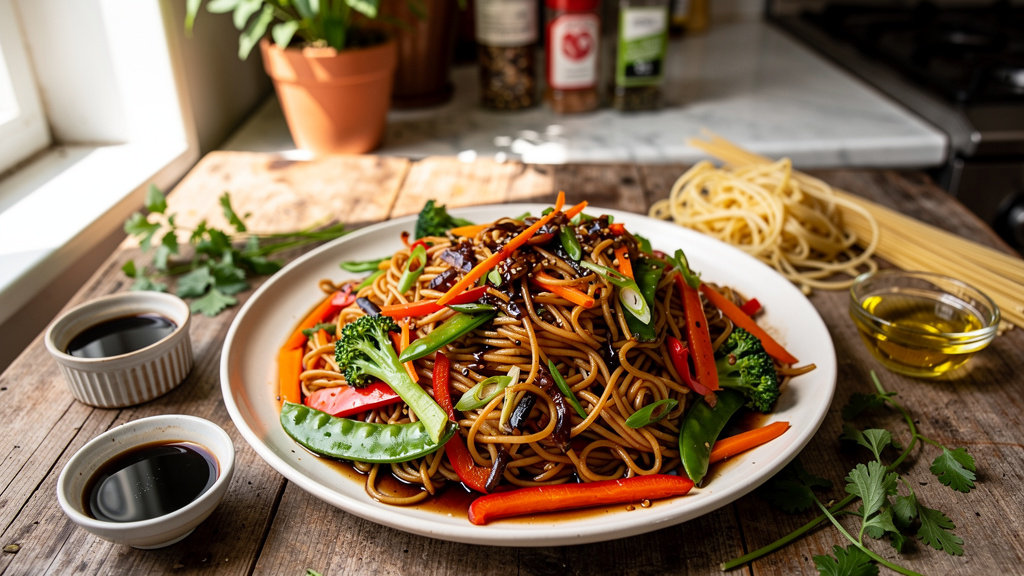
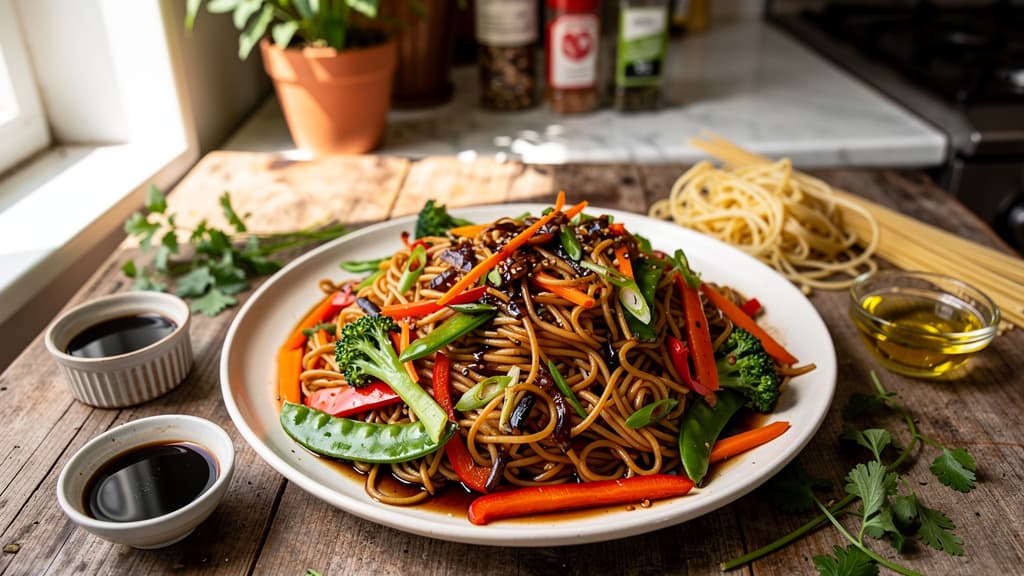
Quick Veggie Lo Mein with Colorful Vegetables (15 Minutes!)
Authentic Chinese lo mein with crisp vegetables and silky noodles, tossed in a savory sauce. Ready in 15 minutes, better than takeout!
👩🍳Instructions
Make the sauce first so it's ready when you need it. In a small bowl, whisk together the vegan oyster sauce, dark soy sauce, regular soy sauce, and sesame oil until well combined. Set it aside near your stove where you can grab it quickly.
Bring a large pot of water to a boil and cook the lo mein noodles according to package directions, but take them off about 1-2 minutes early – they should still be slightly firm. Drain well and set aside. Don't rinse them; you want that starch to help the sauce cling.
Heat your wok or largest skillet over medium-high heat until it's really hot. Add the vegetable oil and swirl it around to coat the pan. Toss in the sliced onion and cook for 4-5 minutes, stirring frequently, until it becomes tender and starts to caramelize at the edges.
Add the sliced garlic and stir constantly for about 1 minute – you'll smell that amazing garlicky aroma when it's ready. Be careful not to let it burn; if your pan is too hot, lower the heat slightly.
Add the carrots, bell pepper, and snow peas to the wok. Keep everything moving with a spatula or wooden spoon, tossing and stirring for 4-5 minutes. The vegetables should be tender-crisp – cooked through but still with a nice crunch and vibrant colors.
Add the cooked noodles to the wok, then pour the sauce over everything. Using tongs or two spatulas, toss and lift the noodles continuously for 1-2 minutes, making sure every strand gets coated with sauce and mixed with the vegetables. The noodles should be silky and glossy.
Taste and adjust seasoning if needed – you might want a splash more soy sauce or a drizzle of sesame oil. Serve immediately in bowls, topped with sliced scallions if using. This dish is best enjoyed hot, straight from the wok!
Nutrition Facts
Per serving: 1/4 of recipe
Love this recipe?
Share it with friends or save it for later