
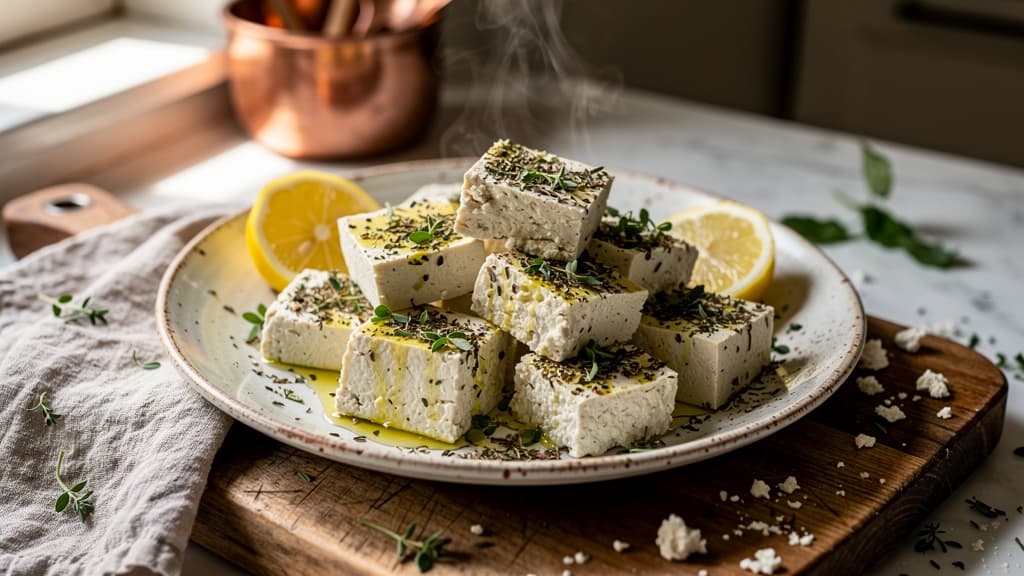

Tested by Sandra & Jan
From our kitchen in Cyprus
Total Time
15 min
Servings
4
Course
Condiment, Appetizer
We'll never forget the first time we sat at a small taverna overlooking the Aegean Sea, watching the sunset paint the white-washed buildings in shades of pink and gold. The server brought out a simple Greek salad, and when we mentioned we were vegan, she paused, then smiled knowingly. "My sister makes something special," she said. That "something special" inspired this recipe—a revelation that you don't need dairy to capture the tangy, salty, crumbly magic of authentic feta cheese.
Since that evening in Santorini, we've been perfecting our vegan tofu feta in kitchens from Tel Aviv to Thailand. The secret? A punchy marinade that transforms humble tofu into something that'll make you do a double-take. The sharp lemon, the herbaceous oregano, the umami-rich miso—they all work together to create those distinctive briny, tangy notes that make feta so irresistible.
What we love most is how ridiculously simple this is. No fancy equipment, no hard-to-find ingredients, just fifteen minutes of active time and a little patience while the flavors work their magic. Whether you're topping a watermelon salad, stuffing it into grape leaves, or crumbling it over roasted vegetables, this tofu feta will become your new Mediterranean staple.
Why You'll Love This Recipe
- •Ready in just 15 minutes active time – the marinade does all the work while you relax
- •Tastes remarkably like authentic feta – tangy, salty, and perfectly crumbly
- •Incredibly versatile – perfect for salads, pasta, mezze platters, and grain bowls
- •Protein-packed and nutritious – tofu delivers complete plant-based protein
- •Stores for up to 2 weeks – make it ahead and enjoy Mediterranean flavors all week long
Ingredients Notes
- •*Firm or Extra-Firm Tofu** - This is crucial for achieving that authentic feta texture. We use firm or extra-firm tofu because it holds its shape beautifully and has a crumbly, cheese-like consistency when pressed properly. Avoid silken or soft tofu—they're too delicate and won't give you those satisfying feta chunks. Look for tofu packed in water, and make sure to press it thoroughly to remove excess moisture. The drier your tofu, the better it absorbs the tangy marinade.
- •*White Miso Paste** - This is our secret weapon for depth and that subtle funky, fermented quality that makes feta so distinctive. White miso (also called shiro miso) is mild and slightly sweet, adding incredible umami without overpowering the other flavors. You'll find it in the refrigerated section of most grocery stores, near the tofu or in the Asian foods aisle. If you can't locate white miso, you can substitute with yellow miso, though it's slightly stronger. In a pinch, an extra teaspoon of salt plus a splash of soy sauce can work, but we highly recommend seeking out the miso—it truly makes a difference.
- •*Apple Cider Vinegar** - Combined with lemon juice, this creates that signature tanginess that defines feta cheese. Apple cider vinegar has a fruity, complex acidity that complements the bright lemon beautifully. White wine vinegar can substitute if needed, but we prefer the rounded flavor of apple cider vinegar in this recipe.
Pro Tips for Success
- •*Press the tofu well** - This is non-negotiable for the best results! Wrap your tofu block in a clean kitchen towel or paper towels, place it on a plate, and set something heavy on top (we use a cast-iron skillet or a few cookbooks). Press for at least 30 minutes, or up to an hour if you have time. The more moisture you remove, the more room you create for that delicious marinade to penetrate. We've tested this both ways, and trust us—pressed tofu makes all the difference between good and incredible.
- •*Cut the right size** - Cube your tofu into roughly ¾-inch pieces. Not too small (they'll fall apart) and not too large (they won't marinate evenly). We're going for that classic feta cube size you'd find in a Greek salad. The beauty is in the imperfect, slightly crumbly edges—don't worry about perfect cubes!
- •*Let it marinate overnight** - While you *can* use this after just an hour, the flavor truly develops after sitting overnight in the refrigerator. The tofu continues absorbing the marinade, becoming more tangy and complex with each passing hour. We usually make ours on Sunday evening for the week ahead. The patience pays off deliciously.
- •*Use quality olive oil** - Since olive oil is a primary ingredient here, splurge a little on good extra virgin olive oil. You'll taste the difference—that fruity, peppery quality adds another layer of Mediterranean authenticity. Plus, you can use the leftover infused oil from the marinade as a flavor-packed salad dressing!
How to Serve
This vegan tofu feta shines anywhere traditional feta would. Crumble it generously over Greek salads with crisp cucumbers, juicy tomatoes, and briny olives. Toss it with warm orzo and fresh herbs for an easy pasta dish. Arrange it on mezze platters alongside hummus, olives, and warm pita. We also love it on grain bowls with roasted vegetables, scattered over pizza before baking, or simply eaten straight from the jar with a fork (we won't judge—we do it all the time).
FAQ
- •*Can I make this ahead?** Yes, and we actually recommend it! This tofu feta tastes even better after marinating for 24 hours. The flavors meld and deepen, and the tofu becomes more thoroughly infused with that tangy, herby goodness. Make it on your meal prep day and enjoy it all week long.
- •*How do I store it?** Keep the tofu cubes completely submerged in the marinade in an airtight container in the refrigerator. The olive oil acts as a preservative, keeping everything fresh and flavorful. Make sure to use a clean fork or spoon each time you remove some to prevent contamination.
- •*How long does it last?** When properly stored and kept submerged in the marinade, your tofu feta will stay fresh for up to 2 weeks in the refrigerator. We've found the flavor actually continues to improve during the first week. If the olive oil solidifies in the cold fridge (this is normal!), just let it sit at room temperature for 10-15 minutes before serving.
- •*Can I freeze it?** We don't recommend freezing this tofu feta. Freezing changes tofu's texture, making it more spongy and less crumbly. Plus, the olive oil-based marinade doesn't freeze well. The good news? With a 2-week refrigerator life, you'll likely finish it long before you need to worry about preservation. It's that addictive!
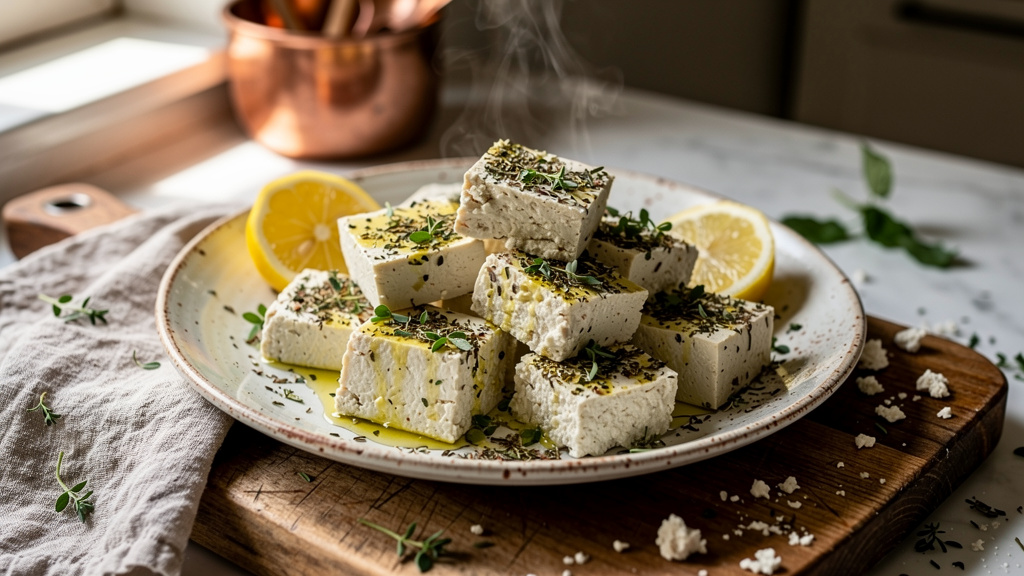
Marinated Vegan Tofu Feta – Tangy, Crumbly Mediterranean Cheese Alternative
This homemade vegan tofu feta is tangy, crumbly, and perfect for salads. Quick marinade transforms simple tofu into Mediterranean magic!
👩🍳Instructions
Start by pressing your tofu if you haven't already. Wrap the block in a clean kitchen towel and place something heavy on top – I use my cast iron skillet. Let it sit for at least 15 minutes to remove excess moisture. This step is crucial for getting that crumbly, cheese-like texture.
While the tofu is pressing, whisk together all your marinade ingredients in a medium bowl: olive oil, lemon juice, apple cider vinegar, miso paste, salt, oregano, garlic powder, and black pepper. The mixture should smell bright and tangy – that's how you know it's going to be good!
Cut your pressed tofu into small cubes, about 1/2-inch in size. You want them roughly the size of traditional feta crumbles. Don't worry about making them perfect – irregular shapes actually look more authentic.
Gently add the tofu cubes to your marinade, tossing carefully to coat every piece. Transfer everything to a clean glass jar or airtight container. The tofu should be mostly submerged in the liquid.
Pop the container in the fridge and let it marinate for at least 2 hours, though overnight is even better. The longer it sits, the more tangy and flavorful it becomes. I sometimes make it three days ahead for parties – the flavor just keeps developing.
When you're ready to use it, simply scoop out what you need with a slotted spoon. Crumble it over salads, stuff it into pita bread with vegetables, or enjoy it the way I do – straight from the jar with warm flatbread and olives. Store any leftovers in the fridge for up to a week, though in my house, it rarely lasts that long!
Nutrition Facts
Per serving: 1/4 of recipe (about 3.5 oz)
Love this recipe?
Share it with friends or save it for later