

Tested by Sandra & Jan
From our kitchen in Cyprus
Total Time
40 min
Servings
2
Course
Main Course, Dinner
A Discovery in Osaka's Hidden Alleys
I'll never forget wandering through the narrow backstreets of Osaka's Dotonbori district on a humid August evening, when the smell of grilled unagi (eel) wafted from every izakaya. As a vegan traveler, I felt that familiar pang of longing – not for the eel itself, but for that glossy, caramelized glaze and the way it glistened over rice. That's when I stumbled into a tiny shojin ryori (Buddhist vegetarian) restaurant, barely wider than my arms could stretch, where an elderly chef was doing something magical with eggplant.
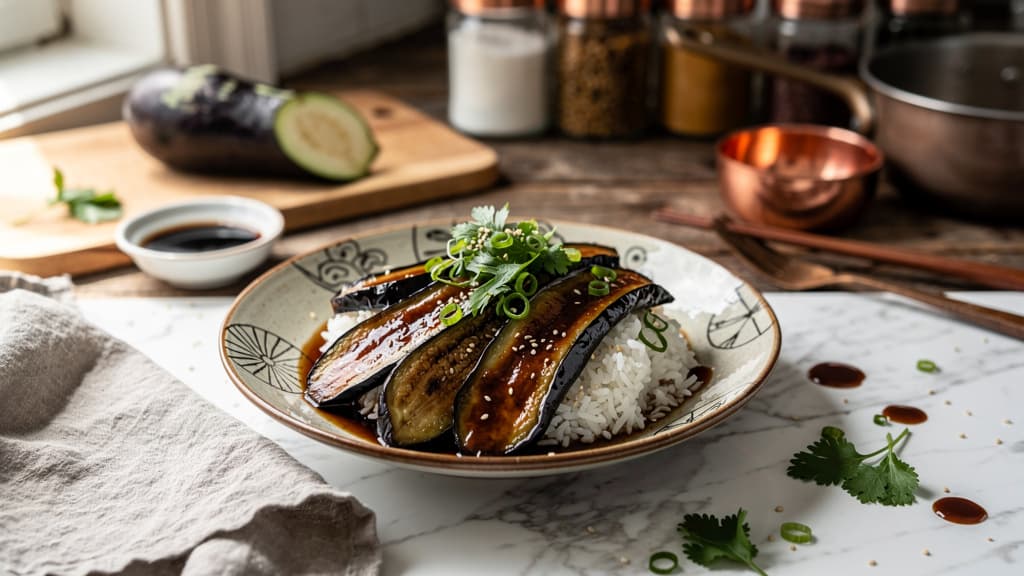
She was treating these purple beauties like they were the most precious ingredient in the world – steaming them until they were silky, then searing them in a screaming hot pan until the flesh turned golden and almost creamy. The teriyaki glaze she brushed on top bubbled and clung to every ridge, creating that same lacquered shine I'd been admiring in the windows. When she served it over a bowl of fluffy rice with a sprinkle of sesame seeds, I understood: this wasn't trying to imitate eel. This was eggplant elevated to its highest potential, and it was absolutely stunning.
I spent the rest of that trip perfecting this technique in my tiny Airbnb kitchen, much to my neighbors' delight (and their curiosity about the incredible smells). Now, whenever I make this dish, I'm transported back to that cramped restaurant, watching the chef work her magic with nothing but patience, heat, and respect for simple ingredients.
Why You'll Love This Recipe
This dish is proof that you don't need complicated ingredients to create restaurant-quality food. The steaming step might seem like an extra hassle, but it's the secret to that melt-in-your-mouth texture that makes this eggplant absolutely irresistible. When you steam eggplant first, it becomes incredibly tender and almost custard-like inside, then the high-heat searing creates this beautiful contrast – crispy, caramelized edges with a silky interior.
The glaze is where the magic happens. That combination of soy sauce, mirin, and teriyaki creates this perfect balance of sweet and savory (what the Japanese call "umami") that coats every surface of the scored eggplant. When it reduces in the pan, it becomes thick and sticky, clinging to the eggplant like a glossy jacket. Plus, eggplant is incredibly nutritious – packed with antioxidants, fiber, and vitamins, all while being naturally low in calories.
Pro Tips for Perfect Results
The scoring technique is crucial here. After steaming, when you cut the eggplant in half lengthwise, use a fork to gently pull apart the flesh in a fan pattern, like you're opening a book. This creates more surface area for the glaze to grab onto and allows the sauce to penetrate deeper into the flesh. Don't be shy about making deep scores – the eggplant is tender enough that it won't fall apart.
Heat control is everything in this recipe. Your pan needs to be hot – really hot – before the eggplant goes in. If the pan isn't hot enough, the eggplant will steam rather than sear, and you'll miss out on that golden caramelization. I use a non-stick pan to prevent sticking, but a well-seasoned cast iron works beautifully too. And here's a pro move: don't flip the eggplant too early. Let it sit undisturbed for 3-4 minutes per side so it develops that gorgeous golden crust.
Variations & Substitutions
If you can't find mirin, you can substitute it with 1 tablespoon of rice vinegar mixed with 1 teaspoon of sugar – it won't be exactly the same, but it'll give you that sweet acidity. For a gluten-free version, use tamari instead of soy sauce and make sure your teriyaki sauce is certified gluten-free (or make your own by combining tamari, maple syrup, and a touch of rice vinegar).
Want more heat? Add a sprinkle of shichimi togarashi (Japanese seven-spice) or some fresh sliced red chili to the glaze. For a complete meal, I love serving this over brown rice for extra fiber, topped with some quick-pickled ginger, edamame, and cucumber. You could also add some sautéed shiitake mushrooms alongside the eggplant for extra umami depth.
If you're serving this for guests, consider cutting the eggplant into smaller medallions instead of halves – they look stunning arranged over individual rice bowls, and everyone gets more of that delicious caramelized surface.
Storage & Make-Ahead Tips
This dish is best enjoyed fresh, but you can definitely prep components ahead. The eggplant can be steamed up to a day in advance and stored in the refrigerator – just bring it to room temperature before searing. The glaze can also be mixed ahead and kept in the fridge for up to a week.
Leftovers keep well in an airtight container in the refrigerator for up to 3 days. To reheat, I recommend using a hot pan rather than the microwave – add a splash of water and warm it gently, which will help the glaze get glossy again. While I haven't tried freezing this particular dish, I suspect the texture would suffer, so I'd recommend making only what you'll eat within a few days. Trust me though, that's rarely a problem – this disappears fast!
Japanese-Style Glazed Eggplant (Vegan Unagi) Over Rice
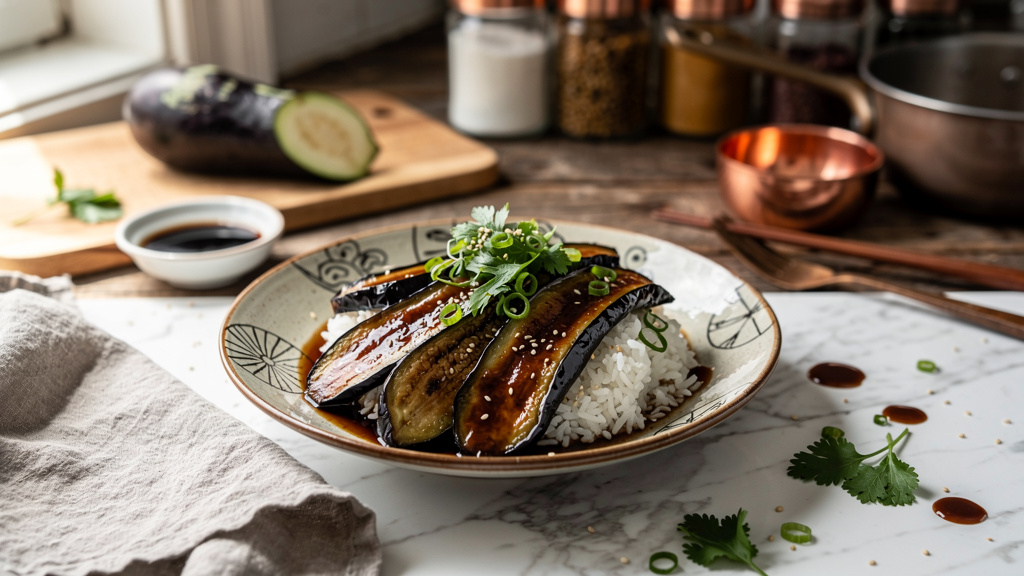
Tender steamed eggplant, pan-fried until golden and glazed with sweet-savory teriyaki sauce. A stunning vegan take on Japanese unagi don.
👩🍳Instructions
Set up your steamer by bringing water to a boil in a pot with a steamer basket, bamboo steamer, or any steaming setup you have. While the water heats, peel the eggplants (you can leave some strips of skin on for color if you like) and trim off both ends. Place the whole eggplants in the steamer basket.
Steam the eggplants over medium heat for 16-18 minutes, until they're completely tender and a knife slides through them like butter. You want them soft all the way through – this is key to getting that silky texture. While they're steaming, prepare your glaze and toppings.
In a small bowl, whisk together the soy sauce, mirin, water, teriyaki sauce, and sugar until the sugar dissolves. Set aside. Slice your scallion into thin rings – I like to slice them on an angle for a prettier presentation.
Once the eggplants are steamed, let them cool for about 5 minutes until you can handle them comfortably. Cut each eggplant in half lengthwise. Now here's the important part: take a fork and gently score the flesh side of each eggplant half in a crisscross pattern, pulling the flesh apart slightly to create a fan effect. This creates more surface area for the glaze to cling to.
Heat the oil in a large non-stick skillet over high heat – and I mean HIGH heat. You want that pan smoking hot. Once the oil shimmers, carefully place the eggplant halves flesh-side down in the pan. Don't move them! Let them sear undisturbed for 3-4 minutes until they develop a beautiful golden-brown crust.
Flip the eggplant halves and sear the skin side for another 2-3 minutes. If the pan looks dry, add another tablespoon of oil. You want both sides nicely caramelized and golden.
Pour the glaze mixture over the eggplant in the pan. Let it bubble and reduce, tilting the pan and spooning the glaze over the eggplant repeatedly. This should take about 2-3 minutes. The glaze will thicken and become sticky, coating the eggplant in a gorgeous glossy layer. Keep an eye on it – you want it thick and syrupy, not burnt.
To serve, divide the cooked rice between two bowls. Place an eggplant half (or two, if you're hungry!) on top of each rice bowl. Drizzle any remaining glaze from the pan over the eggplant. Sprinkle generously with sesame seeds and scatter the sliced scallions on top. Serve immediately while it's hot and glossy.
Nutrition Facts
Per serving: 1 serving
Love this recipe?
Share it with friends or save it for later