
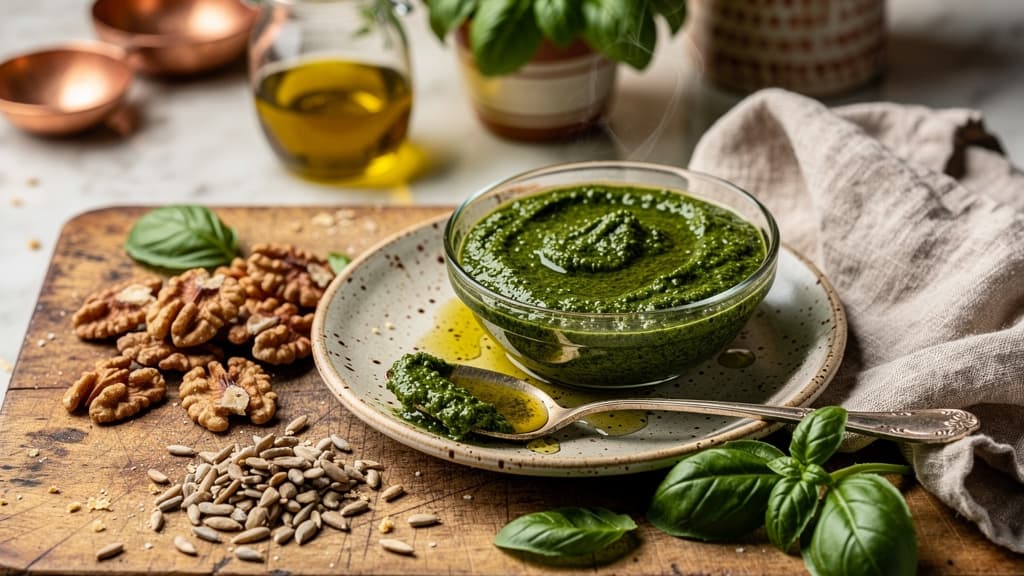

Tested by Sandra & Jan
From our kitchen in Cyprus
Total Time
40 min
Servings
8
Course
Sauce, Condiment
I'll never forget the afternoon I sat in a small trattoria courtyard in Bologna, watching the owner's mother crush basil leaves in a massive marble mortar. The aroma that filled that sun-drenched space—sharp garlic, peppery basil, fruity olive oil—was intoxicating. She noticed me watching and waved me over, letting me peek into her centuries-old mortar. "Sempre così," she said, gesturing at the paste. Always like this. When I gently mentioned I didn't eat cheese, she paused, then smiled knowingly. "Allora, more nuts. More love." That simple wisdom changed everything for me.
That encounter led me down a path of pesto experimentation that's lasted years. Back home in Tel Aviv, I started making this version weekly—sometimes twice weekly when basil season hits and the Carmel Market overflows with fragrant bunches. I've served this to Italian friends who've grudgingly admitted it rivals the "real thing" (high praise from that crowd, trust me). The secret? It's all about technique and respecting the ingredients. No food processor that oxidizes everything in seconds. Just patient work with a mortar and pestle, or at the very least, a few quick pulses if you must use a machine.
Why You'll Love This Recipe
First, it's ridiculously simple. Six ingredients plus salt and lemon—that's it. No hunting for obscure items or special trips to fancy stores. Second, the combination of walnuts and sunflower seeds creates this incredible creaminess that makes you completely forget about parmesan. The walnuts bring that buttery richness, while the sunflower seeds add body without overpowering the basil. And the nutritional yeast? It delivers that umami punch and slightly nutty, cheesy flavor that makes this pesto taste complex and layered.
From a health perspective, you're getting serious benefits here. Basil is loaded with antioxidants and anti-inflammatory compounds. Walnuts provide omega-3 fatty acids (crucial for plant-based diets), and the nutritional yeast offers a complete protein with B-vitamins. Plus, good quality olive oil supports heart health. This isn't just delicious—it's genuinely nourishing.
Pro Tips for the Best Pesto
The chilled mortar trick is non-negotiable if you're going traditional. Room temperature tools mean your herbs heat up and oxidize quickly, turning bitter and dark. A cold mortar keeps everything bright green and fresh-tasting. If you don't have a mortar, chill your food processor bowl too.
Toasting the nuts is where many home cooks skip a step, and it's such a mistake. Those 3-4 minutes in a dry pan transform bland nuts into aromatic, complex flavor bombs. Watch them carefully though—they go from perfect to burnt in seconds. I've learned this the hard way more times than I'd like to admit. You want golden and fragrant, not dark and bitter.
When it comes to the actual pounding or blending, speed matters. Work quickly once you add the olive oil. The longer basil is exposed to air and friction, the more it oxidizes. This is why traditional pesto-makers move with such urgency—they're racing against chemistry.
Variations & Substitutions
Can't find fresh basil? Try this with parsley and a handful of fresh mint, or use arugula for a peppery twist (rocket pesto is huge in Southern Italy). Swap the walnuts for pine nuts if you're feeling fancy, or use cashews for an even creamier texture. Allergic to nuts? Pumpkin seeds work beautifully and give you a gorgeous green color.
Want more garlic punch? Add another clove. Prefer it milder? Roast the garlic first for a sweet, mellow flavor. For a spicy kick, add a pinch of red pepper flakes or a small fresh chili. And if you like it extra tangy, increase the lemon juice—I sometimes go up to a tablespoon when I'm using it on roasted vegetables.
Serving-wise, this obviously shines tossed with pasta (add a splash of pasta water to help it coat), but don't stop there. Spread it on sandwiches, dollop it on roasted tomatoes, swirl it into soup, or thin it with extra olive oil and lemon juice for a spectacular salad dressing. I've even used it as a pizza sauce with stunning results.
Storage & Make-Ahead
Pesto keeps beautifully in the fridge for up to a week. The key is covering the surface with a thin layer of olive oil to prevent oxidation—that's what keeps it bright green. Store it in a glass jar with a tight lid. You can absolutely freeze this for up to three months. I pour it into ice cube trays, freeze, then pop the cubes into a freezer bag. Instant pesto whenever you need it! Just thaw at room temperature for about 30 minutes, or toss frozen cubes directly into hot pasta. The texture holds up remarkably well, though the color may darken slightly after freezing. Trust me, the flavor is still magnificent.
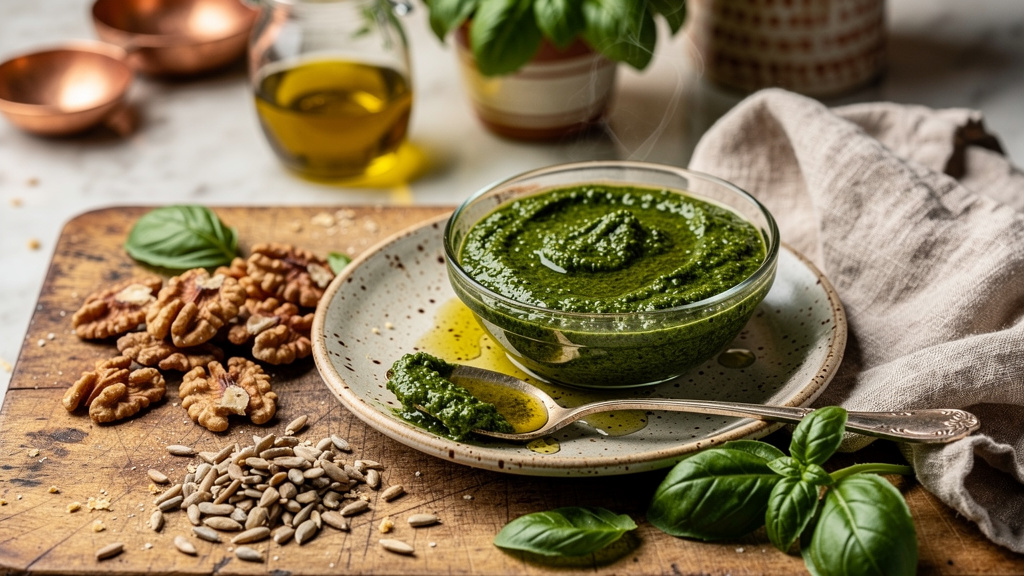
Easy Vegan Basil Pesto (Classic Italian-Style, No Cheese Needed)
My go-to vegan basil pesto recipe using toasted walnuts and nutritional yeast. Bright, fresh, and better than the traditional version!
👩🍳Instructions
Place your mortar and pestle (or food processor bowl and blade) in the refrigerator along with the olive oil. Let everything chill for 30 minutes—this keeps the basil from oxidizing and turning dark.
Heat a dry skillet over medium-high heat. Add the walnuts and sunflower seeds, toasting them for 3-4 minutes until fragrant and lightly golden. Stir or shake the pan frequently so they toast evenly without burning. Transfer to a plate and let cool completely.
Add the basil leaves, garlic clove, and salt to your chilled mortar. Using a pounding and twisting motion, work them into a rough paste. This should take about a minute of good elbow grease. The goal is to bruise and break down the basil, not pulverize it into mush yet.
Add the cooled toasted nuts and seeds. Pound and grind them into the basil mixture until you have a coarse, chunky texture. Some larger pieces are fine—this gives your pesto great character and texture.
Pour in the chilled olive oil and lemon juice. Now work quickly! Grind everything together with steady, circular motions until you reach your desired consistency. I like mine a bit chunky, but if you prefer it smoother, just keep working it for another minute or two.
Stir in the nutritional yeast with a spoon until evenly distributed. Taste and adjust with more salt if needed. If it seems too thick, add another tablespoon of olive oil. Use immediately, or transfer to a jar and cover the surface with a thin layer of olive oil before sealing and refrigerating.
Nutrition Facts
Per serving: 1/8 of recipe
Love this recipe?
Share it with friends or save it for later